“South America” search results (2000)

Ecuadorian coffee beans from South America
Coffee origin: the Ecuadorian Arabian Coffee Tree was first introduced to Ecuador (Ecuador) in 1952 and its coffee quality is very good, especially the coffee harvested in early June. Ecuadorian coffee beans can be divided into two varieties: Galapagos and Gigante, both of which have the characteristics of large granules and heavy weight. Ecuadorian coffee can be divided into first class (No.1) and special coffee according to quality.
2014-09-18 Coffee origin South American coffee beans Ecuadorian coffee beans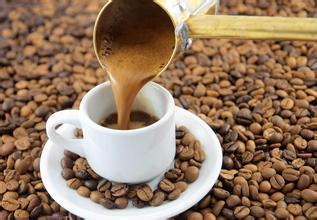
Panamanian Kasha Coffee Grinding degree Taste characteristics introduction of Fine Coffee Flavor
Central America is a long isthmus from northern Mexico to southern Colombia, connecting North and South America. Panama is located in the southernmost part of Central America, so the country runs from east to west, not from north to south as people think. This means that the coast of the Caribbean (Atlantic) is in its north, while the Pacific is in the south. So far, Panama also shares the Atlantic Ocean.
2016-10-07 Bana Marca coffee grinding taste characteristics boutique flavor description introduction
Which three kinds of coffee trees in South America are famous?
The Liberian coffee tree is native to Liberia in Africa, and its cultivation history is shorter than that of the other two coffee trees, so it is limited to a few places such as Liberia, Suriname and Gaiana, so it accounts for less than 5% of the world's output. The Liberian coffee tree is suitable for planting in the lowlands, and the coffee beans produced have a very strong aroma and bitter taste. Robasta coffee tree is native.
2016-06-06 South America coffee species introduction three kinds comparison famous Liberia
Coffee knowledge what you need to know about coffee when drinking coffee
Brazil (South America) Santos coffee: taste mellow, neutral, can be directly boiled, or mixed with other kinds of coffee beans into a comprehensive coffee, is also a good choice. Columbia (South America) Manning: the palate is rich and solid, with a pleasant sour taste. The smell is mellow, the acidity is moderate, the sweetness is rich and very intriguing, it is suitable for deep baking and exudes a strong aroma.
2016-05-27 Coffee knowledge drink often need understand what Brazil South America Doss coffee
Introduction to the description and treatment of taste and flavor in the producing area of Peruvian coffee
In 1542, the Spanish royal family set up the Government House in Lima and established the Governor's District of Peru, which became the center of Spanish colonial rule in South America. At that time, Peruvian commerce was prosperous, merchants controlled most of South America's import and export trade, and the precious metals and other goods looted by the Spaniards from South America were shipped out of Peru. The colonists encroached on land in Peru, forced the Mita system, and forced the Indians to
2016-10-15 Peru coffee grinding characteristics variety producing area taste flavor description treatment
South Africa is fragrant with less acidity, reminiscent of Central American coffee beans
It is fragrant with less acidity, reminiscent of coffee beans from Central America. Coffee production in South Africa (SouthAfrica) is mainly in the northeast of the country, from Natal between Transvaal and Mozambique, extending northward to Transvaal, with a southernmost limit of latitude 30 south. Further south, coffee cannot be grown due to the harm of early frost.
2016-05-20 South Africa taste aroma acidity less reminiscent Central America coffee beans
Panamanian Coffee Cupid Coffee Manor flavor and taste characteristics of Panamanian coffee
The unique geographical environment of Central America is a long isthmus from northern Mexico to southern Colombia, connecting North and South America. Panama is located in the southernmost part of Central America, so the country runs from east to west, not from north to south as people think. This means that the coast of the Caribbean (Atlantic) is in its north, while the Pacific is in the south. So far, Bana
2016-08-06 Panama Coffee Cupid Manor producing area Flavor Taste characteristics introduction alone
Introduction to the Origin of Fine Coffee beans in South America Coffee Coffee in Coffee Manor Coffee producing area
1. Brazil is the first coffee producer and marketer in the world. The annual output of coffee beans exceeds 30 million bags (60 kilograms each). Coffee experts do not think highly of their beans, saying that they are too monotonous, bitter, sour and fragrant enough, and are not even included in the list of producing areas of fine coffee. Because most of the Brazilian coffee gardens are less than 1200 meters above sea level, there are no big trees to shade, and the way of picking beans is rough and ripe.
2016-03-23 South America boutique coffee beans origin introduction cultivation coffee manor producing area Pakistan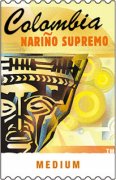
South American Columbia Coffee selected by Starbucks
Colombian Coffee description: Colombian coffee is moderately mellow, smooth and smooth, and has a distinct nut flavor. This super coffee can only be produced in the Narino region. Processing: washing method. Location: Colombia is the most northwestern country in South America, bordering Panama in the west. Narino is a member of southwestern Colombia
2015-06-01 Buck for use South America Colombia coffee.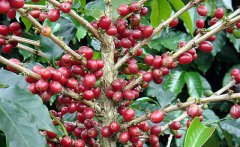
South African coffee is fragrant with less acidity, reminiscent of Central American coffee beans
It is fragrant with less acidity, reminiscent of coffee beans from Central America. Coffee production in South Africa (SouthAfrica) is mainly in the northeast of the country, from Natal between Transvaal and Mozambique, extending northward to Transvaal, with a southernmost limit of latitude 30 south. Further south, coffee cannot be grown due to the harm of early frost.
2016-05-17 South Africa coffee taste aroma acidity less reminiscent Central America
South African coffee is fragrant with less acidity, reminiscent of Central American coffee beans
It is fragrant with less acidity, reminiscent of coffee beans from Central America. Coffee production in South Africa (SouthAfrica) is mainly in the northeast of the country, from Natal between Transvaal and Mozambique, extending northward to Transvaal, with a southernmost limit of latitude 30 south. Further south, coffee cannot be grown due to the harm of early frost.
2016-05-18 South Africa coffee taste aroma acidity less reminiscent Central America
Introduction of major coffee producing areas in the world Central and South American coffee beans, African coffee beans, Asian coffee beans
[introduction] Coffee comes from coffee beans, which are harvested and processed from the fruit of trees. Coffee trees grow at the center of the equator, between latitudes of 25 degrees south and north, and are called coffee belts in the homes of tropical or subtropical countries. at present, raw coffee comes from coffee beans, which are harvested and processed from the fruits of the trees. Coffee trees grow at the center of the equator.
2016-04-22 World main coffee producing areas introduction Central and South America coffee beans Africa Asia
Bolivian boutique coffee beans with sour taste of citrus fruits: an introduction to the characteristics of the manor area
The legal capital, the seat of the Supreme Court, with a population of 284000, 2790 meters above sea level. Founded in 1538, the city was formerly known as Chuquisaka. The city witnessed the first uprising in South America against Spanish rule in 1809. Bolivia declared its independence here in 1825 and became the capital in 1826. In 1839, it was renamed Sucre to commemorate the second president of Bolivia, General Antonio Jos é Sucre.
2016-08-16 Oranges fruit sour Bolivia boutique coffee beans flavor taste manor
Introduction to the types, varieties, taste and flavor of coffee beans
Mantenin (Indonesia, Sumatra, Asia) Acid 0 Glycerol 3 Alcohol 3 aroma 3 characteristic Flavor Blue Mountain (Jamaica, Central America, West Indies) Acid 1 Gump 3 bitter Alcohol 3 aroma 3 the highest quality Columbia (Colombia, South America) Acid 2 Glycerol 3 bitter Alcohol 3 aroma 2 most Standard quality Mocha (Isbiya, Africa) Acid 3 Glycine 2 bitter 1 Alcohol 2 aroma 2 characteristic Flavor Clemangaro (Tanzania)
2016-06-01 Coffee beans species varieties taste flavor introduction Mante Indonesia Sumanda Asia
Good place to grow coffee beans-Colombia
The Republic of Colombia is located in the northwest of South America. Venezuela in the northeast, Brazil in the southeast, Peru and Ecuador in the south, Panama in the northwest; the Pacific Ocean in the west, the Caribbean Sea in the north, and the Great Western Ocean in the east. It is the only two-ocean country in South America. Colombia is both a gateway to North and South America and a maritime link to both Europe and the Pacific Rim
2014-08-08 Coffee knowledge Colombia Coffee growing
Peru SHB Fine Coffee Raw Bean Peru Origin Regional Distribution of imported Coffee beans: central and South America
The rising star of the coffee industry, Peruvian coffee as a rising star of the coffee industry, Peruvian coffee is gradually opening up its popularity and entering the international market. Peruvian coffee has always been used as one of the stable and mellow mixed beans of comprehensive coffee. Peruvian coffee has a mellow taste and the right acidity, and this lukewarm coffee attitude has made more and more people like it. Peru lies in the west of South America
2016-04-26 Peru SHB boutique coffee raw beans origin import
An introduction to the coffee producing countries of Honduras in the mountainous countries of Central and North America
Honduras is a mountainous country in Central and North America, with a population of more than 8.3 million and an area of about 112000 square kilometers. Located in the north of Central America. It is bordered by the Caribbean Sea to the north, the Gulf of Fonseca in the Pacific Ocean to the south, Nicaragua and El Salvador to the east and south, and Guatemala to the west. More than 3/4 of the territory are mountains and plateaus. The mountains extend from west to east, inland is a lava plateau, mountainous
2016-06-24 North America mountainous country Honduras coffee producing country introduction North
Costa Rica San Roman washing plant coffee beans cooked beans representative of Central and South America
The best coffee in Costa Rica seems to come from small processing plants, spread across several major coffee producing areas, including Tarazu and the western valley. This so-called coffee revolution originated 15 years ago and has greatly changed the way bean baking experts and importers think about Costa Rican coffee. Take the processing plant as the center, collect coffee beans from the surrounding small farms for processing, most of these farms are small societies
2016-05-10 Costa Rica Roman washing processing plant coffee cooked beans Central and South America representative
Introduction of Fine Coffee beans in Coffee Flavor and Taste area of Panamanian Jade Manor
Panama is located in the isthmus of Panama in Central America, bordered by Colombia to the east, the Pacific Ocean to the south, the map of Panama to Costa Rica to the west and the Caribbean Sea to the north. The territory is S-shaped to connect North and South America, and the Panama Canal connects the Atlantic and Pacific oceans from north to south. It is known as the bridge of the world. [5] Panama has a land area of 75517 square kilometers.
2016-09-03 Panama Jade Manor Coffee Flavor Taste producing area characteristics Fine goods
Coffee in South America
[Colombia] is the world's second-largest coffee producer, accounting for about 12% of the world's annual production, although much lower than the 30 to 35% of Brazil, most of which are high-quality alpine washed beans. Central Colombia is divided into several valleys by three north-south vertical mountains, of which the central and eastern mountains are the main coffee producing areas. Coffee here is named after the market of distribution,
2015-02-09 boutique coffee basics common sense South America Colombia world second largest